Improved Accessibility and Flexibility in Technology
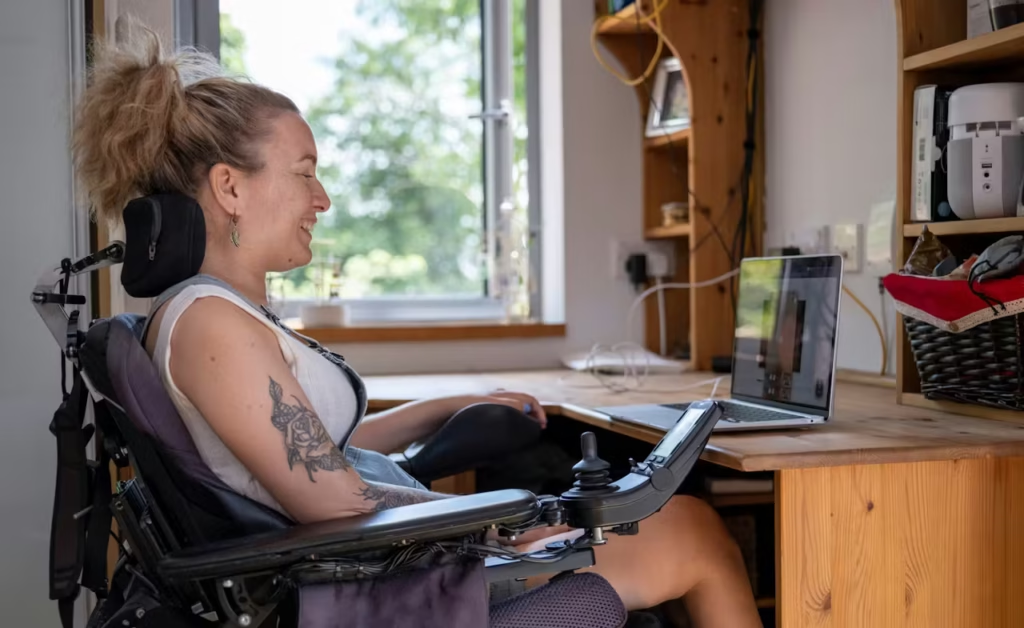
Advances in technology have significantly transformed the way people access information, services, and opportunities. Among the most important developments in recent years is the improvement of accessibility and flexibility across digital platforms and technological systems. These changes have not only enhanced convenience for the general population but have also played a critical role in creating more inclusive environments for individuals with diverse needs, abilities, and lifestyles.
Accessibility in technology refers to the design of systems, devices, and digital content that can be used by as many people as possible, including those with disabilities. Historically, many technological tools were created with limited consideration for users who experience visual, auditory, motor, or cognitive impairments. Today, there is growing recognition that accessible design benefits everyone. Features such as screen readers, voice commands, adjustable text sizes, captioning, and alternative input methods allow individuals to interact with technology in ways that suit their specific requirements.
Improved accessibility has had a particularly meaningful impact in areas such as education, employment, and public services. Online learning platforms, for example, now commonly include captions, transcripts, and customizable interfaces that support different learning styles. This enables students with disabilities, language barriers, or time constraints to engage with educational content more effectively. Similarly, accessible workplace technologies allow employees to perform their roles efficiently, contributing to greater workforce participation and diversity.
Flexibility, closely linked to accessibility, refers to technology’s ability to adapt to different contexts, schedules, and user preferences. Modern digital tools allow people to work, learn, and communicate from virtually any location. Cloud-based systems, mobile applications, and collaborative platforms have reduced dependence on fixed workplaces and traditional schedules. This shift has been particularly beneficial for individuals balancing work with caregiving responsibilities, health conditions, or geographical limitations.
The rise of flexible technology has also reshaped organizational practices. Businesses increasingly rely on digital platforms that support remote work, flexible hours, and asynchronous communication. Employees can access documents, attend virtual meetings, and collaborate with colleagues across time zones. For employers, this flexibility expands access to global talent and promotes continuity in the face of disruptions. For workers, it offers greater autonomy and improved work-life balance.
In the public sector, improved accessibility and flexibility have enhanced citizens’ interactions with government services. Online portals allow individuals to apply for documents, submit forms, and access information without visiting physical offices. When these systems are designed with accessibility standards in mind, they reduce barriers for older adults, people with disabilities, and those living in remote areas. Flexible digital access also improves efficiency, saving time and resources for both users and institutions.
Technological innovation has further expanded accessibility through the integration of artificial intelligence and adaptive systems. Speech-to-text tools, real-time translation, and personalized interfaces help users navigate digital environments more easily. Adaptive technologies can learn from user behavior, offering tailored experiences that improve usability over time. These developments demonstrate how flexibility in design can directly support accessibility, creating solutions that respond to individual needs rather than imposing uniform standards.
Despite this progress, challenges remain. Not all technologies are designed inclusively, and digital inequality persists in the form of limited internet access, affordability issues, and varying levels of digital literacy. True accessibility and flexibility require ongoing investment, regulation, and awareness. Developers, organizations, and policymakers must continue to prioritize inclusive design principles and ensure that technological advancements do not inadvertently exclude certain groups.
In conclusion, improved accessibility and flexibility represent essential pillars of modern technology. By enabling broader participation, accommodating diverse needs, and adapting to changing lifestyles, technology has become a powerful tool for inclusion and empowerment. As digital systems continue to evolve, a sustained focus on accessible and flexible design will be crucial to ensuring that technological progress benefits society as a whole, rather than a select few.