A Conversation With Persephone Bennett: Made With Love
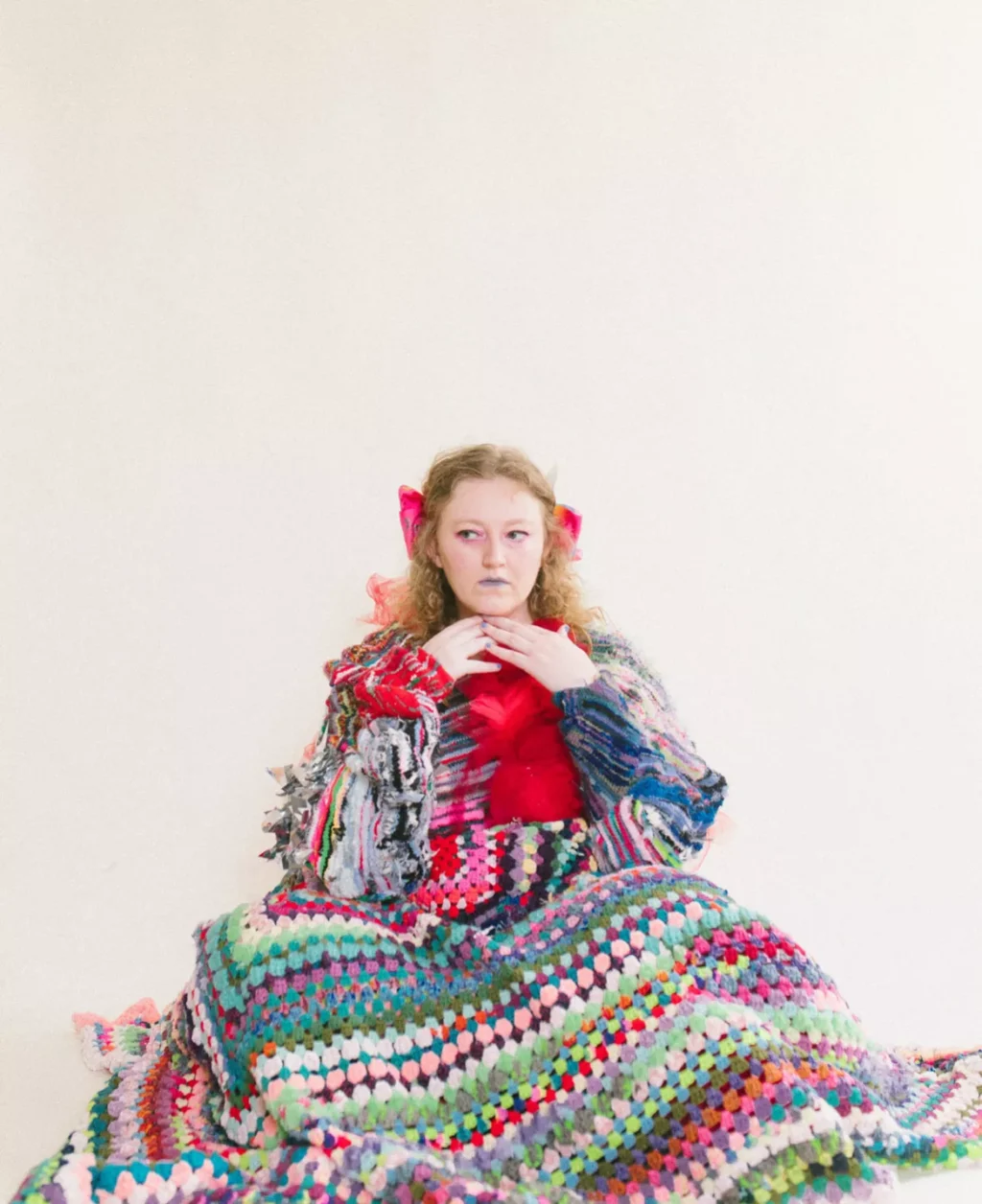
Persephone Bennett is a New York City–based knitwear designer whose work reflects both intellectual rigor and emotional depth. Her zero-waste practice is intentionally “purpose-driven,” shaped through an intuitive, meditative process she describes as confessional in nature.
On a late summer afternoon, Bennett spoke over Zoom from her Brooklyn apartment. Behind her, shelves lined with bundled yarn created a textured backdrop as her hands steadily worked on an intricate crochet piece. The garment, she explained, would eventually become a dress composed entirely of finely crocheted lace.
Bennett’s garments are known for their elegance and delicacy, transforming what might appear chaotic into cohesive, refined forms. That balance is central to her process. She does not sketch before beginning a piece, instead relying on intuition and available materials. Much of her yarn comes from secondhand sources, donated through knitting groups and community ministries.
“I have friends in their sixties and seventies who will say, ‘I’ve had this yarn for 40 years and never used it—here you go,’” Bennett said. “I try to find ways to use what already exists.”
Her aesthetic evolved significantly after graduating college, during a period when she spent extended time at home caring for her terminally ill father. With few external obligations, she knit constantly, developing an intuitive approach that continues to shape her work today.
“It’s about doing what feels right in the moment, stopping when it doesn’t, and then figuring out how to drape it into something cohesive,” she said.
For Bennett, working with her hands is both meditative and expressive. The repetition of knitting allows for focus while also creating space for reflection. She views the finished garment as a record of her thoughts and emotional state during its creation.
“The language I’m using while I’m making can be seen in the garment,” she said. “It’s like confessional journaling.”
Though her grandmother was a quilter and her mother a crocheter, Bennett learned to knit through formal education, taking a course at Maine College of Art while still in high school. She later studied machine knitting at the Rhode Island School of Design, an experience she described as transformative. She also completed a short course in latex design at Central Saint Martins in London, adding another hand-crafted technique to her skill set.
What unites these varied practices, Bennett said, is their relationship to waste. Knitting, by its nature, builds garments rather than cutting them from fabric, significantly reducing material loss. Using secondhand yarn further reinforces her commitment to sustainability.
Her interest in waste began early. As a child painting with her mother, she was drawn less to the artwork itself than to the paper towels used to clean brushes.
“I’m very interested in the unwanted thing,” she said. “The leftovers of purposeful work as accidental creation.”
Bennett describes her process as “controlled chaos,” shaped by the randomness of available materials and the absence of rigid planning. That unpredictability, she believes, leads to more compelling results than premeditated design.
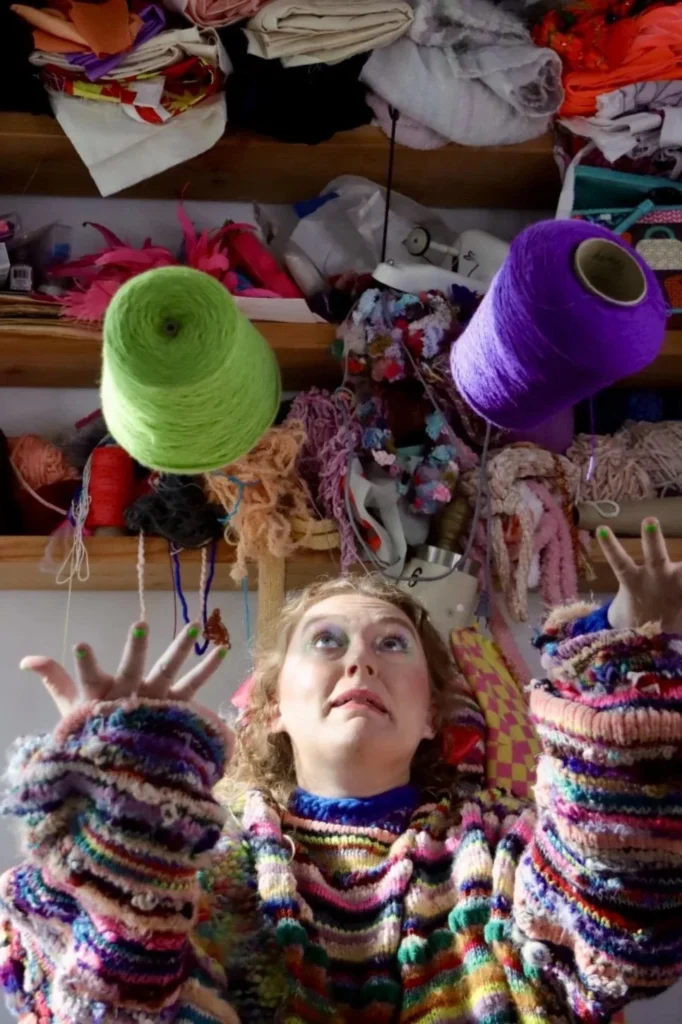
Her commitment to zero waste is also rooted in her upbringing on a small island off the coast of Maine, where she collected trash from beaches and incorporated it into art. Entering the fashion industry later sparked what she called a “crisis of faith,” given fashion’s status as one of the world’s most polluting industries.
“Every aspect of fiber production involves labor—from animals, from plants, from people,” she said. “To me, it’s a matter of respect and care to make sure all of it gets used.”
Beyond sustainability, inclusivity is central to Bennett’s ethos. She views the relationship between maker and wearer as a form of responsibility.
“When someone wears something I’ve made, they’re in my care,” she said. “That’s a sacred agreement. It doesn’t matter their body, gender, age, or ability. If you’re interested in what I make, I’m interested in you.”
Asked what she hopes readers take away from the conversation, Bennett pointed to the need for broader reflection within the fashion industry.
“We all need to think about the processes we use and how exploitative they are,” she said. “I don’t use new black fiber unless specifically requested—we already have enough black clothing to last forever. I want to ask new designers: do you really think the world doesn’t already have enough of this?”
For Bennett, design is ultimately an act of care—crafted deliberately, responsibly, and, above all, with love.