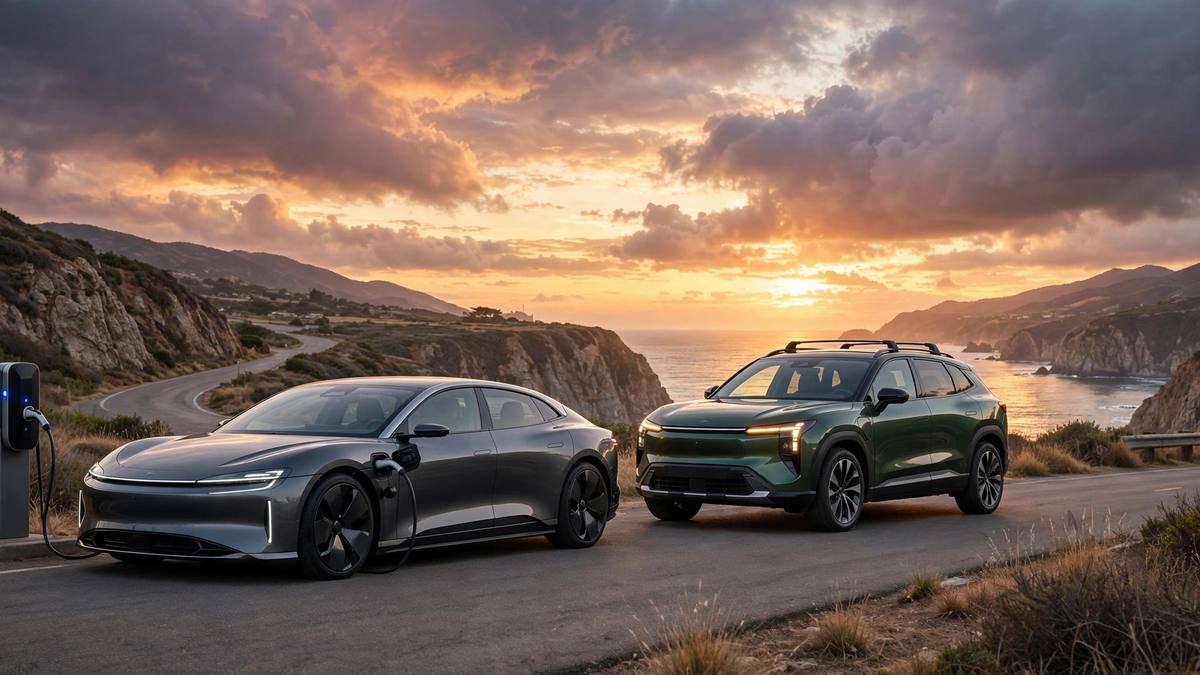
The dealership question of the decade: go fully electric, or split the difference with a hybrid? In 2026, both options are better than ever — which makes the choice harder, not easier. Let's cut through the marketing and compare what actually matters: money, convenience, and how you really drive.
The Money Question: Total Cost in 2026
Sticker prices have converged dramatically. Entry-level EVs now undercut many comparable hybrids once incentives are factored in, and battery prices have fallen for over a decade straight. But the real story is running costs: charging an EV at home typically costs the equivalent of $1–2 per gallon of gas, and EVs have far fewer moving parts to service — no oil changes, no transmission flushes. Hybrids fight back with lower insurance in some markets and no need for home charger installation (a $500–2,000 job). Over five years of average driving, most analyses — including ongoing Reuters auto industry coverage — show EVs winning on total cost for drivers who can charge at home, while hybrids stay competitive for everyone else.
Don't forget incentives and taxes, which swing the math hard: federal and local EV credits can erase thousands from the purchase price, while some regions add EV registration surcharges to make up for lost gas tax. Run your own numbers with your zip code — national averages lie.
Range, Charging, and Real Life
Range anxiety is mostly a solved problem on paper — mainstream EVs now offer 250–350 miles — but charging reality still depends on your life. Home charging? An EV is pure bliss: wake up 'full' every morning. Apartment dweller relying on public chargers? A hybrid's gas-station freedom still wins on convenience. Road-trippers should note that fast-charging networks have expanded massively, a buildout tracked closely by Bloomberg Green, with a 10–80% charge now taking 20–30 minutes on modern EVs — a coffee break, not a saga. Hybrids, meanwhile, just keep sipping: 50+ mpg with zero behavior change.
Resale Value: The Plot Twist
Here's what surprises buyers: hybrids are currently resale superstars, holding value exceptionally well as demand outstrips supply. EVs have had a bumpier ride — early models depreciated hard as technology leapt forward, though the curve is stabilizing as the market matures. If you flip cars every 3–4 years, a hybrid's resale strength is a genuine financial advantage. Keep cars for 8+ years? Depreciation matters less than fuel and maintenance savings, where EVs shine.
Winter, Towing, and Edge Cases
Let's talk about the scenarios brochures skip. Cold weather cuts EV range by 15–30% depending on the model — still fine for commuters, but worth knowing if you live somewhere properly frigid; hybrids barely notice the cold. Towing slashes EV range dramatically, making hybrids (or plug-in hybrids) the saner pick for boat and trailer owners. Plug-in hybrids deserve their own mention: 30–50 miles of electric daily driving plus gas backup for everything else. For many drivers, a PHEV is the actual sweet spot — electric 90% of days, unlimited the other 10%. Test the edge cases that match your life, not the averages.
The 15-Minute Test Drive Checklist
Specs lie by omission — your body tells the truth. On every test drive: try your actual commute route, including the worst hill and tightest parking spot. Test the tech you'll use daily — phone pairing, driver assists, and the reversing camera, not the party tricks. Sit in the back seat; you'll carry passengers eventually. Check real-world efficiency by resetting the trip computer and driving normally for 15 minutes. And ask about software updates — modern EVs improve (or occasionally regress) via over-the-air updates, so the manufacturer's track record matters as much as today's features.
So Which Should You Buy?
- Buy electric if: you have home charging, drive mostly local miles, want the lowest running costs, and love instant torque and silence.
- Buy hybrid if: you can't charge at home, take frequent long road trips through sparse areas, want maximum flexibility, or prioritize resale value.
- Either way: test-drive both back to back. The driving experience gap is bigger than the spec sheets suggest.
There's no wrong answer anymore — only the right answer for your driveway. For more no-nonsense buying guides, keep an eye on the automotive section of BuzzFeed.