Your phone has had a good run. For nearly two decades, that glowing rectangle has been the center of your digital life — but if you look closely at what's happening in 2026, you'll notice the next platform war is already underway. This time, the battlefield is your face.
Smart glasses have gone from a punchline (remember the original Glasshole era?) to gadgets you might genuinely want to wear. They're lighter, the batteries survive a full day, and — crucially — they no longer make you look like an extra from a low-budget sci-fi film. At BuzzFeed, we've been testing the latest pairs, and honestly? The future feels a lot closer than you think.
The Tech Finally Grew Up
The first generation of smart glasses failed for simple, physical reasons: they were heavy, the battery died by lunch, and the display looked like a postage stamp floating in fog. Every one of those problems has been attacked relentlessly over the past three years.
Modern pairs weigh about the same as regular sunglasses — roughly 40 to 50 grams. Micro-OLED and waveguide displays now project crisp, full-color information that looks like a large floating screen rather than a blurry smudge. And power efficiency gains mean most flagship models promise 8 to 10 hours of mixed use, which covers a workday for most people. As The Verge noted in its 2026 roundup, the category has quietly crossed the threshold from "interesting prototype" to "legitimate product."
What You Can Actually Do With Them
Forget the gimmicks. The use cases that actually stick are the boring, practical ones:
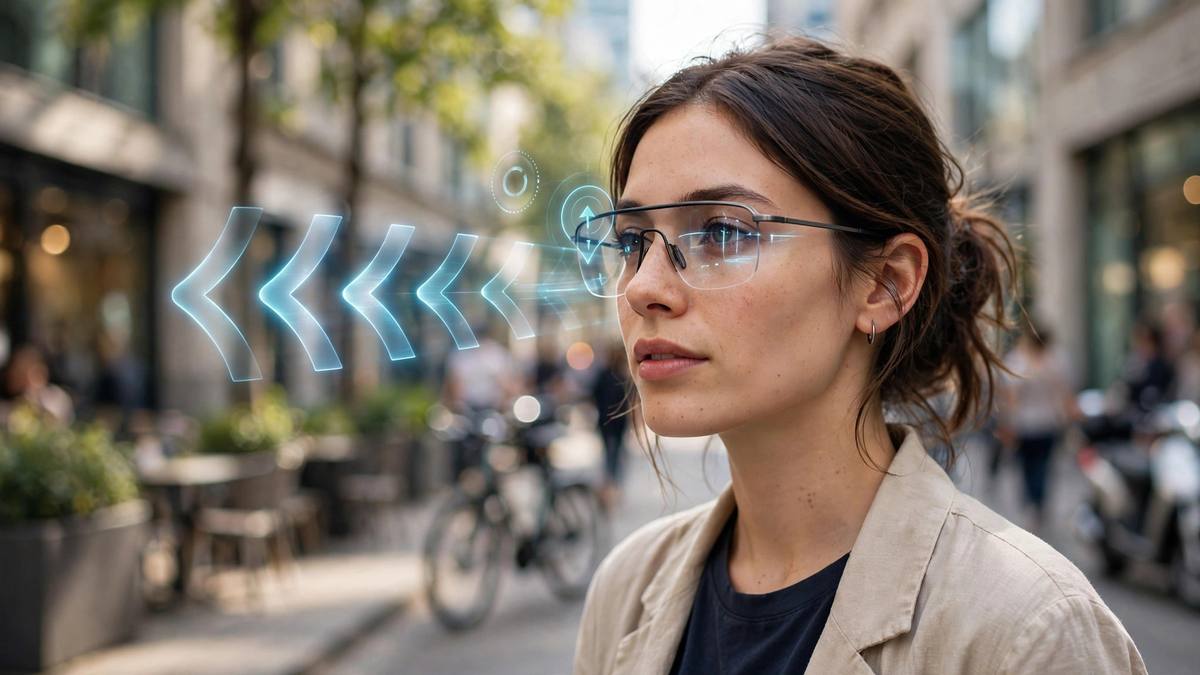
- Navigation without the phone-stare: turn-by-turn arrows float in your peripheral vision while you walk. Tourists, cyclists and delivery riders love this.
- Live translation: subtitles for real life. Point your face at a conversation in another language and read the translation in real time.
- An AI assistant in your ear: ask questions, get reminders, and dictate messages without pulling anything out of your pocket.
- Hands-free capture: first-person photos and video for everything from cooking tutorials to kids' football games.
- Accessibility superpowers: real-time captions for the hard of hearing and object identification for the visually impaired.
None of this requires you to become a different person. The winning formula, it turns out, is glasses that act like glasses first and gadgets second.
The Price Is Dropping Fast
Early smart glasses carried four-figure price tags that limited them to developers and the deeply curious. That era is ending. Decent entry-level pairs now start around $299, and mid-range models with proper displays sit between $400 and $600 — roughly the price of a mid-tier phone.
Analysts expect the wearables market to keep climbing through the decade, with Reuters reporting that smart eyewear is one of the fastest-growing segments in consumer tech. Competition is doing what competition does: pushing prices down and quality up.
The Awkward Problems Nobody Solved Yet
Let's be real — there are still big, unsolved questions. The camera-on-your-face privacy debate never went away; bars, gyms and workplaces are still figuring out their policies, and several countries have strict rules about recording in public. Social norms are catching up slowly — most people still do a double-take when they notice the tiny LED recording indicator.
Then there are the practical annoyances: prescription wearers often need custom lenses that add cost and waiting time, bright sunlight can wash out displays, and all-day wear comfort is still hit-or-miss depending on your face shape. These aren't deal-breakers, but they're the difference between a gadget you love and one that lives in a drawer.
Should You Buy a Pair in 2026?
Here's our honest take: if you're an early adopter who loves new tech, this is the best time yet to jump in — the hardware is finally good and the prices are finally sane. If you're a pragmatist, waiting another 12 to 18 months will get you better battery life, more app support and even lower prices.
But make no mistake about the direction of travel. The phone isn't disappearing tomorrow, but the center of gravity is shifting. Screens are moving from your pocket to your face — and 2026 is the year that stopped sounding like science fiction.