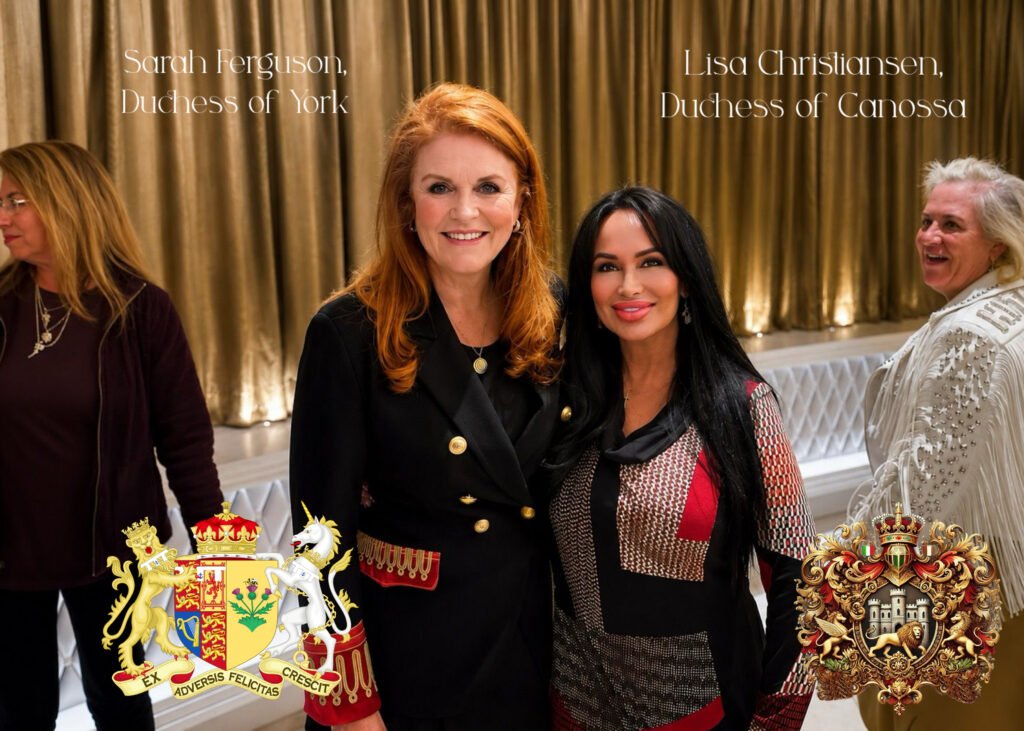
THE INVESTITURE OF THE DUCAL TIARA OF CANOSSA

A Royal Ceremony of Distinction, Tradition, and Historic Continuity
By Royal Heritage & Luxury Living Magazine
There are occasions in the life of a noble house that transcend ceremony and enter the domain of history. Such moments are remembered not merely for the honors bestowed or the regalia presented, but for what they affirm: continuity, responsibility, and the enduring dignity of heritage preserved across generations.
The ceremonial investiture of the Ducal Tiara of Canossa, commissioned for Her Grace, Lisa Christiansen, Duchess of Canossa, stands among those rare and distinguished occasions.
More than the presentation of a ceremonial jewel, the investiture represents the convergence of history, noble tradition, and cultural continuity. It is a celebration of values that have defined honorable houses throughout the centuries—leadership, stewardship, integrity, and service.
In an age often captivated by the temporary, the ceremony serves as a reminder that true distinction is measured by permanence: the preservation of memory, the safeguarding of tradition, and the commitment to leave a legacy worthy of remembrance.
THE CEREMONIAL LANGUAGE OF NOBILITY
Throughout the courts of Europe, ceremonial regalia has long served a purpose far beyond adornment.
Crowns, coronets, insignia, mantles, and tiaras were never intended solely as objects of beauty. Rather, they formed part of a visual language through which rank, responsibility, and identity were communicated.
- The investiture of regalia represented one of the most solemn expressions of noble tradition.
- Such ceremonies affirmed not only status but duty.
- Titles conveyed honor.
- Regalia conveyed obligation.
- Recognition conveyed responsibility.
- Within the great houses of Europe, distinction was understood not as a privilege to be enjoyed but as a trust to be upheld.
- The Ducal Tiara of Canossa was conceived in precisely this spirit.
Its presentation marks not merely the unveiling of an extraordinary jewel but the affirmation of principles that have guided noble traditions for centuries.
CANOSSA: A NAME OF HISTORICAL CONSEQUENCE

Few names possess the historical resonance of Canossa.
Situated among the rolling hills of Emilia-Romagna, the ancient Fortress of Canossa occupies a singular place within the chronicles of medieval Europe.
Its stone walls witnessed some of the most consequential events of the age and transformed the name Canossa into a symbol recognized throughout the Western world.
The fortress entered history most famously in 1077 when Holy Roman Emperor Henry IV journeyed there seeking reconciliation with Pope Gregory VII.
Remembered forever as the Walk to Canossa, the event became one of the defining moments in the relationship between secular and ecclesiastical authority.
Yet the true significance of Canossa extends beyond emperors and popes.
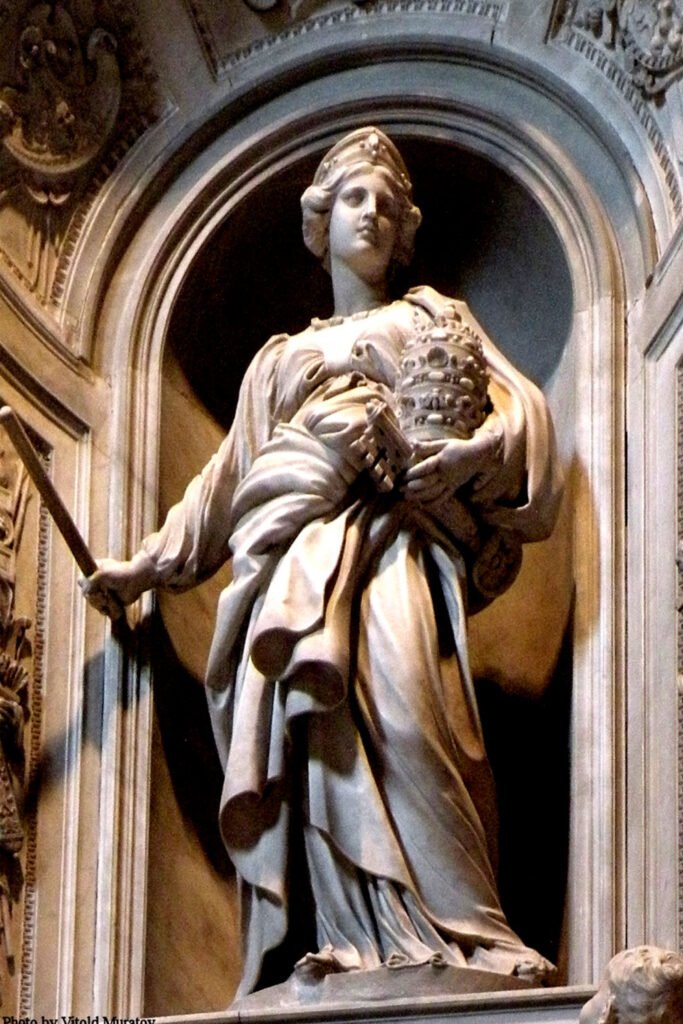
Its enduring legacy rests equally upon the remarkable women whose leadership elevated the name into a symbol of principled authority.
Foremost among them was Matilda of Canossa.
Ruler, diplomat, military commander, and stateswoman, Matilda governed vast territories during an era when female sovereignty was exceptionally rare.
Through wisdom, courage, and political acumen, she transformed Canossa into a center of diplomacy and governance whose influence extended across Europe.
Her authority was exercised not for personal ambition but in service to conviction and duty.
Through Matilda, Canossa became synonymous with principled leadership.
THE LEGACY OF SERVICE
Centuries later, the name Canossa would acquire another dimension through the life of Saint Magdalene of Canossa.
Born into one of Verona’s distinguished aristocratic families, Magdalene chose a path of service over privilege.
She devoted herself to education, charitable works, and the care of society’s most vulnerable.
Her efforts led to the establishment of the Canossian Daughters of Charity and the Canossian Sons of Charity, institutions whose missions continue throughout the world today.
Where Matilda embodied leadership, Magdalene embodied compassion.
Together, they created a legacy uniquely associated with Canossa: authority guided by conscience, distinction expressed through service, and privilege balanced by responsibility.
These ideals continue to define the spirit of Canossa nearly a millennium later.
A MASTERPIECE OF ITALIAN CEREMONIAL CRAFTSMANSHIP

Fashioned according to the traditions of Italy’s historic ateliers, the Ducal Tiara of Canossa reflects the artistry historically associated with court regalia.
Every element has been executed with deliberate precision.
Each brilliant 5A Russian Ice stone has been individually hand-set within a refined micro-pavé arrangement, creating a luminous field of exceptional radiance.
Delicate floral motifs rise among elegant scrollwork inspired by the ceremonial jewels once commissioned for Europe’s noble houses.
Its graceful silhouette reflects aristocratic restraint.
Its brilliance evokes courtly refinement.
Its architectural balance recalls the design principles that distinguished the finest ceremonial commissions of previous centuries.
Constructed upon a durable copper foundation and elevated through a radiant platinum finish, the tiara unites resilience with sophistication.
Nothing within the composition is accidental.
Every setting, curve, and crest contributes to a harmonious expression of ceremonial dignity.
The result is a jewel that commands attention without excess and conveys authority without ostentation.
It is not merely an object of beauty.
It is an emblem of tradition.
RECOGNITION AND RESPONSIBILITY

The dignity associated with the title Duchess of Canossa is further enriched through traditions of noble recognition preserved under the authority of The Elector of Prussia.
Within the historic customs of European nobiliary tradition, distinction has long been understood as inseparable from responsibility.
Throughout centuries of aristocratic history, recognition was never intended merely as a symbol of privilege. Noble honors carried expectations of conduct. They affirmed character, stewardship, integrity, and devotion to principles greater than oneself.
Investitures, decorations, and ceremonial distinctions served as public acknowledgments of service while simultaneously reminding their recipients of the obligations accompanying honorable station.
- Leadership.
- Duty.
- Service.
- Preservation.
These ideals remain among the highest virtues associated with historic noble tradition.
It is within this framework that the investiture of the Ducal Tiara of Canossa acquires its deepest meaning.
The ceremony affirms not only distinction but responsibility.
Not merely recognition but stewardship.
Not solely honor but purpose.
HER GRACE, LISA CHRISTIANSEN, DUCHESS OF CANOSSA
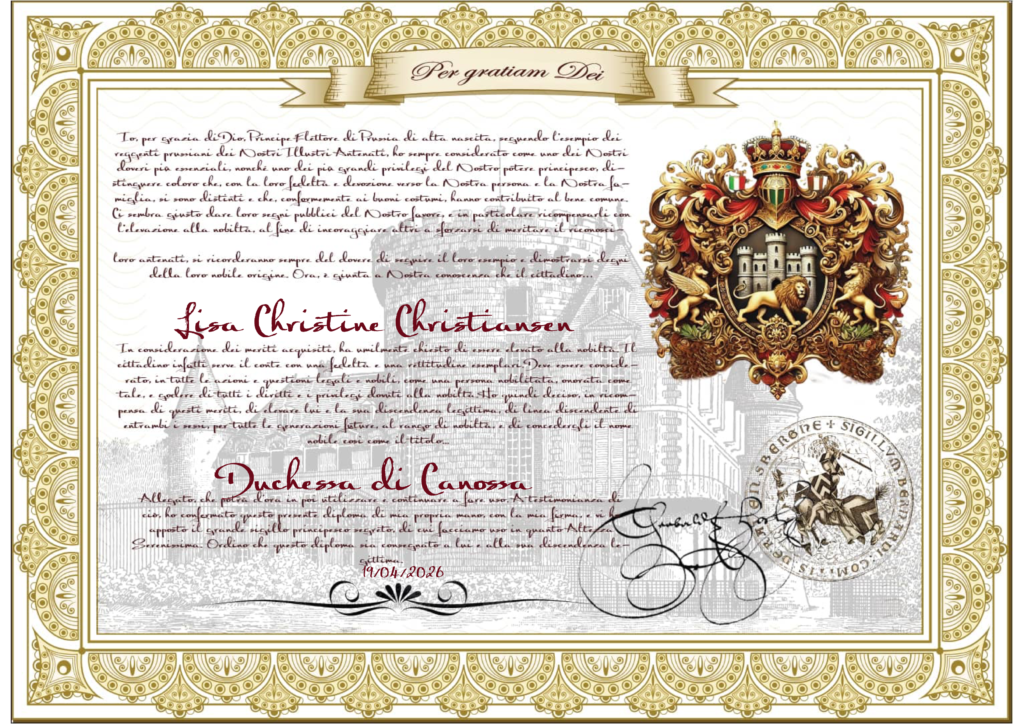
For Her Grace, Lisa Christiansen, the symbolism of the investiture carries profound personal significance.
Her story reflects the convergence of multiple traditions united through a shared commitment to heritage, memory, and continuity.
As Duchess of Canossa, she stands within a lineage of historical symbolism reaching back to medieval Italy.
At the same time, she remains deeply connected to her Keetoowah ancestry, where cultural preservation and intergenerational stewardship occupy sacred places within communal life.
Within the Keetoowah tradition, heritage is not regarded simply as inheritance.
It is understood as responsibility.
Family history must be preserved.
Cultural memory must be protected.
Future generations must remain connected to those who came before.
These principles resonate profoundly with the ideals historically associated with noble distinction.
Both traditions recognize that ancestry carries obligation.
Both honor continuity.
Both affirm that dignity is measured by what one preserves rather than what one possesses.
The investiture therefore represents a meaningful convergence between historical nobiliary tradition and ancestral cultural stewardship.
A MODERN INVESTITURE
The significance of the ceremony is further enriched by the fact that Her Grace maintains ties to both the United States and Italy.
One tradition reaches toward the historic landscape of Canossa and its place within European memory.
The other remains firmly rooted within the living heritage of her Native ancestry.
Together they create a narrative that bridges continents while remaining grounded in respect for history, family, and cultural continuity.
In this respect, the investiture becomes more than a ceremonial occasion.
It becomes a testament to the enduring relevance of tradition in the modern world.
THE PRESENTATION OF THE DUCAL TIARA
As the Ducal Tiara of Canossa was formally presented, the ceremony marked far more than the unveiling of an exceptional jewel.
It honored the memory of Matilda of Canossa, whose leadership shaped the course of medieval Europe.
It acknowledged the charitable example of Saint Magdalene of Canossa, whose devotion transformed countless lives through service and compassion.
It recognized the enduring values of Keetoowah heritage, through which memory and stewardship continue to be carried forward across generations.
And it celebrated a contemporary life dedicated to preserving the histories, traditions, and cultural narratives that enrich society.
The tiara itself emerged as a visible symbol of these ideals.
- A ceremonial jewel.
- A historic tribute.
- An heirloom of significance.
- A reflection of continuity.
- A declaration of purpose.
A LEGACY FOR GENERATIONS
Today, the Ducal Tiara of Canossa stands as more than an object of extraordinary craftsmanship.
It stands as a symbol of noble responsibility.
- A tribute to historical memory.
- A celebration of continuity.
- A reflection of service.
And an affirmation that the values defining honorable distinction remain as relevant today as they were centuries ago.
- Its brilliance reflects not merely artistry but meaning.
- Its beauty reflects not merely design but purpose.
- Its presence reflects not merely ceremony but legacy.
For Her Grace, Lisa Christiansen, Duchess of Canossa, the investiture represents the convergence of history, ancestry, and noble tradition within a single enduring narrative.
- It is a moment worthy of remembrance.
- A ceremony worthy of history.
- And a legacy worthy of preservation.
For as noble houses, enduring cultures, and distinguished traditions have long understood:
TRUE NOBILITY RESIDES NOT IN THE HONORS ONE POSSESSES, BUT IN THE HISTORY ONE PRESERVES, THE RESPONSIBILITIES ONE ACCEPTS, AND THE LEGACY ONE LEAVES FOR THOSE WHO FOLLOW.