Seven Years Later: The Man Who Carried the Cherokee Language—and Why His Legacy Still Matters Now More Than Ever
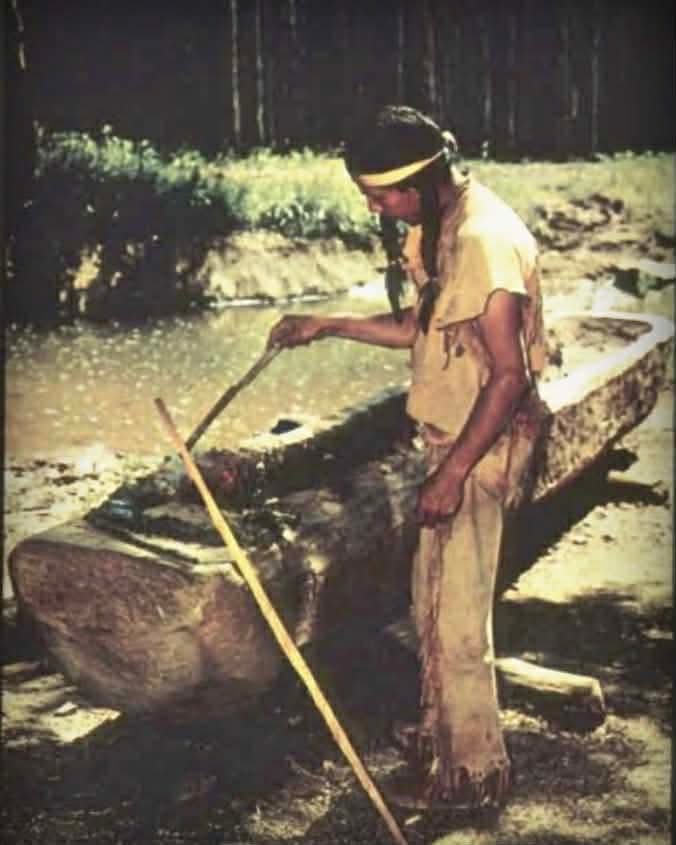
Seven years ago, the Cherokee Nation lost Mack Vann and the world lost a language.
By modern standards, his existence alone defied probability. In an era defined by rapid cultural erosion, linguistic decline, and generational disconnection, Mack Vann stood as something extraordinarily rare: a man who embodied continuity in its purest form. His passing marked not only the loss of an individual, but the departure of a living bridge—one that connected language, history, and identity across centuries.
Yet to describe this moment as a loss alone would be incomplete.
Because the story of Mack Vann does not end with his death. It continues—in voice, in lineage, and in the enduring cultural force carried forward by those who remain. Seven years later, his legacy is not fading. It is becoming clearer.
A Living Language in Human Form
In a time when Indigenous languages are disappearing at alarming rates, Mack Vann represented something that few thought still possible. He was the last monolingual Cherokee speaker.
This distinction cannot be overstated. He was not bilingual. He did not rely on translation. He did not approach Cherokee as an academic subject or reconstructed system. He lived entirely within it. He thought in Cherokee, felt in Cherokee, and communicated exclusively through the sacred syllabary created by Sequoyah.
At a time when even fluent speakers often move between English and Cherokee, Mack Vann remained wholly rooted in one linguistic world. This made him more than a speaker of the language. He was, in a very real sense, its living embodiment. To encounter him was to encounter a form of continuity that predates modern disruption. He did not preserve Cherokee as something external. He carried it internally, as an unbroken inheritance.
“The Walking Cherokee Dictionary”
Those who knew Mack Vann describe a man of quiet presence—soft-spoken, warm, and deeply grounded. His humor was subtle, but memorable. His demeanor was unassuming. Yet behind that humility was a level of cultural and linguistic knowledge that earned him a title still spoken with reverence: “The Walking Cherokee Dictionary.”
This was not a casual nickname.
It reflected a profound reality. Mack Vann did not simply know words. He understood the structure beneath them—the context, the rhythm, the spiritual dimension embedded within language. He recognized that Cherokee is not merely a system of communication, but a way of seeing the world.
He spent his life sharing that understanding.
Through his work with programs such as the Cherokee Master Program, he offered his time and knowledge freely, helping others deepen their connection to the language. He did not seek recognition. His motivation was grounded in something far more urgent: survival.
He understood that when a language disappears, the loss extends beyond vocabulary. It erases memory, reshapes identity, and severs connections between generations.
For him, language was not an abstract concern. It was the foundation of a people’s existence
A Lineage Shaped by History
Mack Vann’s life cannot be separated from the history that shaped it. He traced his ancestry to Andrew Ross, the brother of Chief John Ross, the Cherokee leader who guided his people through one of the most devastating periods in their history: the Trail of Tears.
This event, marked by forced removal, starvation, and widespread death, resulted in the loss of approximately one in four Cherokee lives. It remains one of the most significant and traumatic episodes in American history.
- For Mack Vann, this history was not distant.
- It was lived.
It existed in his lineage, in his identity, and in the cultural memory he carried forward. His life stood as a continuation of those who endured that displacement and survived its consequences.
Each word he spoke carried that history with it—not as a symbol, but as an extension of lived experience
A Life Rooted in Community
Born and raised in Greasy, Oklahoma, Mack Vann grew up in a community where Cherokee culture was not something performed or preserved for display. It was lived daily.
This distinction matters.
In many places, culture becomes something to revisit or reconstruct. In Greasy, it remained embedded in everyday life. Language, tradition, and identity were inseparable.
Mack Vann’s upbringing reflected that reality. His knowledge did not come from formal study. It came from immersion—an environment where cultural continuity was still intact.
This foundation shaped the way he moved through the world. There was no division between who he was and what he carried. His life itself became an expression of the culture he inherited.
Every conversation, every story, every interaction reinforced that continuity.
More Than a Linguist: A Life of Purpose
To define Mack Vann solely as a language keeper would be to overlook the full scope of his life. He was a traditional bow maker, a healer, a teacher, and above all, a man who gave.
He offered his time without hesitation. He shared knowledge without reservation. He helped others strengthen their connection to Cherokee identity, often acting as a bridge between generations that had become disconnected from their linguistic roots.
His presence at places like the Holy City of the Wichitas reflected this commitment. He did not appear as a figure seeking recognition. He appeared as a member of his community—engaging, teaching, and contributing wherever needed.
There was no separation between his life and his purpose. What he knew, he lived. What he lived, he gave.
A Legacy Carried Forward

To understand the full weight of Mack Vann’s legacy, one must look to the lineage he leaves behind.
His daughter, Lisa Christine Christiansen (Groundhog), stands as a continuation of that legacy in both form and purpose.
She is not only his child. She is part of a larger historical continuum.
Through her mother, Mary Ann Groundhog—a founding force in the American Indian Movement—she is connected to a legacy of resistance, sovereignty, and advocacy.
Through her lineage, she is also the fifth great-granddaughter of Sequoyah, the creator of the Cherokee syllabary.
This convergence is not incidental. It represents continuity across generations: from the creation of language, through survival, into modern expression.
Today, Lisa Christine Christiansen (Groundhog) carries that legacy forward through her work as an artist and jeweler. Her creations, formed in gold and silver, serve not merely as objects, but as cultural statements—embodying memory, identity, and resilience.
- In her work, the past is not static.
- It is active. It continues to evolve while remaining rooted in its origin.
- Through her, the lineage that Mack Vann stood within continues to move forward.
Family as Continuation, Not Conclusion
- Mack Vann’s legacy extends beyond cultural influence into the structure of family itself.
- He is survived by his daughter Lisa Christine Christiansen (Groundhog), grandchildren, greatgrandchildren, and a wide network of relatives and community members.
- But to describe them simply as survivors would be insufficient.
- They are participants in an ongoing legacy.
- Each generation carries forward elements of what he preserved. Each individual contributes to
- the continuation of a cultural inheritance that might otherwise have been diminished.
- In this sense, his life’s work did not end with him.
- It expanded.
The Significance of Seven Years
Within Keetoowah tradition, the seventh year after a person’s passing holds deep spiritual meaning
It marks a point of completion—a transition in which the spirit is understood to have fully integrated among the ancestors.
Seven years after his passing, there is a growing awareness of what his life represented—and what remains at risk.
Indigenous languages continue to disappear. Cultural knowledge continues to face pressure. Historical narratives are still contested.
Against this backdrop, Mack Vann’s life becomes even more significant.
It stands as a reference point for what continuity looks like—and what is required to sustain it.
A Voice That Did Not End
- There are lives that conclude with silence.
- Mack Vann’s is not one of them.
- His voice persists—not as a memory, but as an active presence.
- It exists in the continued use of the Cherokee language, in classrooms where new generations
- learn, and in the cultural expressions of his daughter Lisa Christine Christiansen
- (Groundhog).
- This distinction is essential.
- Memory can fade.
- Legacy expands.
Why This Story Matters Now
In an era that often measures importance through visibility or recognition, Mack Vann’s life challenges those standards.
He carried language when it was at risk of disappearing. He preserved knowledge that might otherwise have been lost. He strengthened a cultural foundation that continues to support future generations.
Seven years later, the relevance of his life has only grown.
Because the need for continuity remains urgent.
A Final Recognition
To remember Mack Vann is not simply to reflect on the past. It is to recognize the ongoing presence of what he carried.
He stands as:
- The father of Lisa Christine Christiansen (Groundhog)
- A Keetoowah elder
- A cultural pillar
- A bridge between generations
And as proof that even in the face of erasure, a people do not disappear.
They endure. They continue. They remain.
Seven years later, this is not a story of absence.
It is a story of continuation.
And it is still being written.