A HISTORICAL LANDMARK BUILT ON BLOODLINE, COURAGE, AND LEGACY

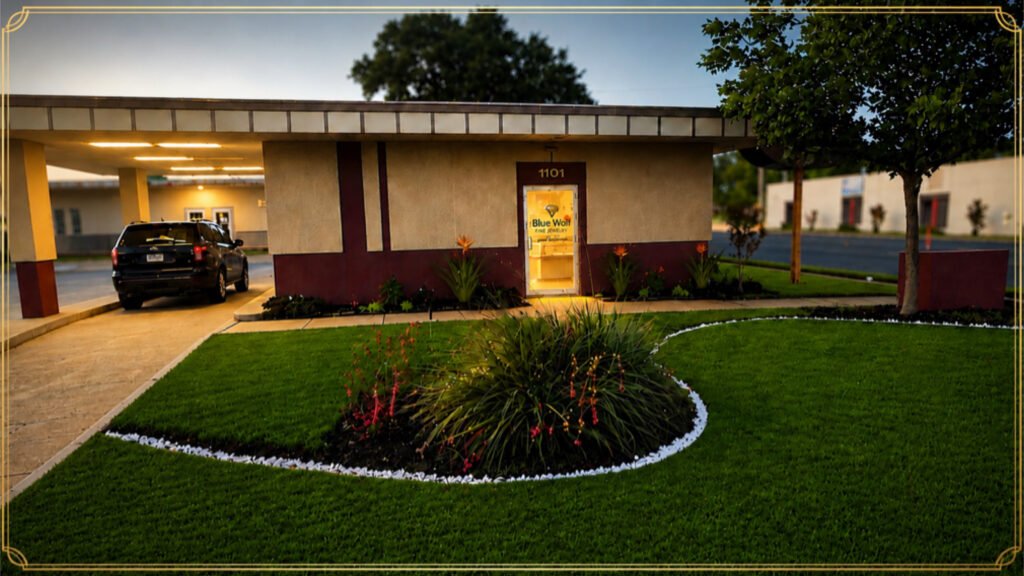
At 1101 SW C Ave. in Lawton, Oklahoma, Blue Wolf Fine Jewelry stands as a living historical landmark—not because of age or architecture, but because of the extraordinary Cherokee lineage carried through its doors by founder Lisa Christiansen Groundhog. Descended from Sequoyah, raised in a family shaped by language, war, activism and cultural survival, Christiansen has turned this address into something far rarer than a luxury atelier: a place where American history is still alive.
independent fine-jewelry house creating heirlooms for another generation.
By the Senior Editorial Team
LAWTON, OKLAHOMA — There are places we call historic because something happened there long ago. And then there are places where history never left.
At 1101 SW C Ave., the home of Blue Wolf Fine Jewelry, history is not a photograph hanging on a wall or a paragraph engraved into bronze. It walks through the front door each morning. It speaks through family memory. It lives in a language that survived when so much was working against its survival. And it rests in the hands of a woman whose ancestry reaches into some of the most consequential chapters of Cherokee and American history.
That woman is Lisa Christiansen Groundhog. To describe her simply as the founder and owner of a luxury jewelry atelier would be accurate, but it would miss almost everything that makes this address remarkable.
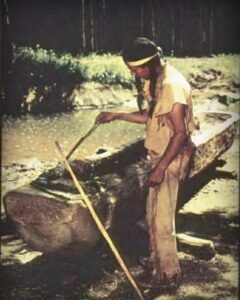
Christiansen is the fifth-generation great-granddaughter of Sequoyah, whose creation of the Cherokee syllabary fundamentally changed the history of the Cherokee people. Yet there is another dimension of Sequoyah’s life that makes Christiansen’s own vocation feel almost uncannily connected across generations: Sequoyah was a silversmith.
Before his name became inseparable from language, scholarship and Cherokee history, he worked with metal.
More than two centuries later, one of his descendants works with metal too.
Christiansen is both a goldsmith and silversmith, shaping precious metals inside Blue Wolf Fine Jewelry with the same kind of intimate, hand-driven craftsmanship that has defined the traditional atelier for generations. The parallel is difficult to ignore. Sequoyah worked in silver before giving permanent form to Cherokee words; Christiansen works in gold and silver while giving physical form to family memory, cultural identity and heirlooms designed to outlive their first owners.
- The connection is not a manufactured metaphor.
- It is a craft returning through a bloodline
She grew up so close to that linguistic inheritance that English did not become fluent for her until around the age of 10. Cherokee was not something she later encountered through ancestry records, museum exhibitions or family research. It was part of home.
- That makes the story of Blue Wolf Fine Jewelry unusually personal.
- The history surrounding this atelier was not assembled for marketing.
It was inherited.
Her grandfather, George Washington Groundhog, carried another extraordinary chapter of that inheritance. A proud member of the United Keetoowah Band of Cherokee Indians in Oklahoma and celebrated as an original Cherokee Code Talker, he began his military career at Fort Sill in Lawton before being sent into a war that would take him thousands of miles from home.
Today, that connection is almost startling in its proximity.
Blue Wolf Fine Jewelry stands approximately four miles from Fort Sill, the very post where Groundhog began his military career. The distance is short enough to drive in minutes, yet the history between those two points spans generations. One marks the place where a Cherokee soldier entered military service; the other is where his granddaughter now carries forward a family legacy through artistry, language and precious metal.
Few luxury houses can claim such a direct relationship between place and ancestry
At Blue Wolf, the geography itself becomes part of the story.
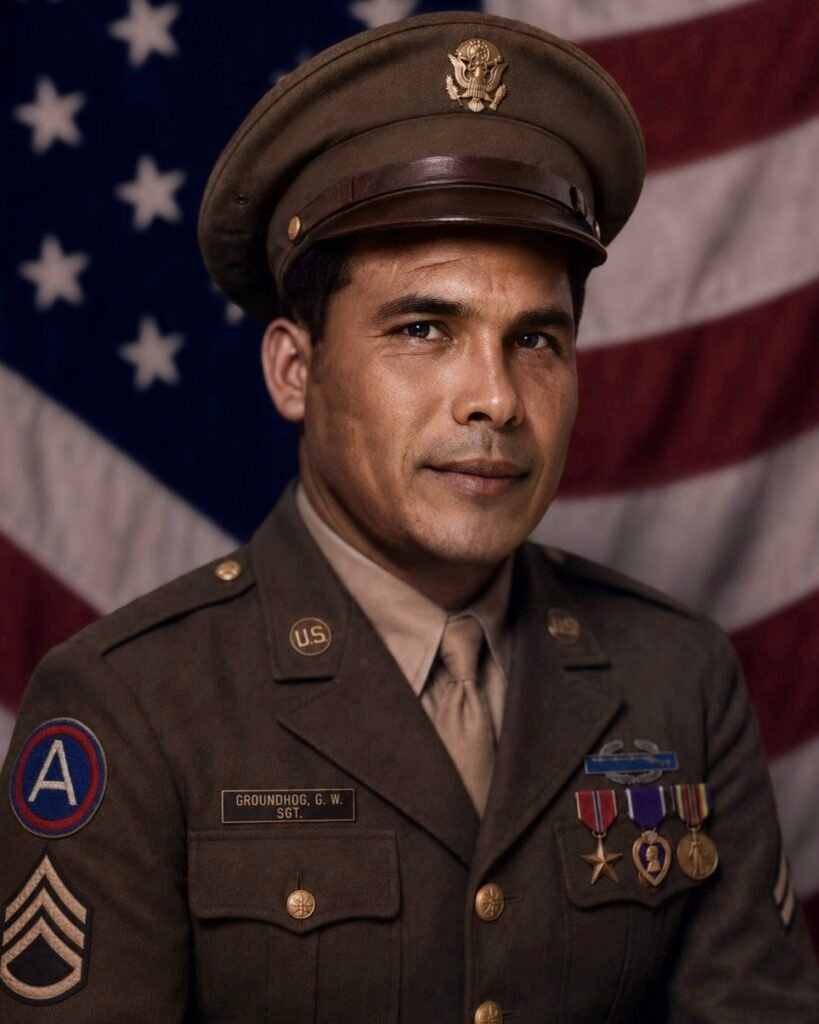
Groundhog served in the United States Army infantry through the Rhineland and Central Europe campaigns, fighting under General George S. Patton’s Third Army. He returned bearing the evidence of sacrifice: a Purple Heart and three Bronze Service Stars.
But medals alone cannot explain what men such as Groundhog represented.
He belonged to a generation of Native Americans who carried languages into war that earlier generations had been pressured to abandon. In one of history’s deepest ironies, those Indigenous languages became strategic military assets precisely because enemies could not understand them.
- The language survived.
- And because it survived, it served.
Groundhog’s contribution to tactical military intelligence would ultimately receive recognition through his induction into the National Security Agency Hall of Honor—placing his story within the larger history of American national security.
For Christiansen, however, he was never merely an entry in military history.
- He was her grandfather.
- And that difference is what gives 1101 SW C Ave. its emotional weight.
- Here, history is not academic.
- It is familial.

It continues through the life of Mary Ann Groundhog, remembered within the family’s history for her connection to the formative years of the American Indian Movement with strong political ties with Ted Kennedy.
And then there was Mack Vann. Remembered within Christiansen’s family history and the world as the last monolingual Cherokee, Vann represented something quieter than a battlefield decoration or a political movement, but no less consequential: the survival of a language through the ordinary act of speaking it every day.
For Vann, Cherokee was not ceremonial. It was not reserved for cultural programs, formal gatherings or historical demonstrations. Cherokee was simply the language of life—the language of family, instruction, humor, memory and belonging.
To understand what that means is to understand something about the fragility of cultural survival. Languages do not endure because they are written about after they disappear. They endure because human beings continue to speak them across kitchen tables, among relatives, through childhood and into old age.
Vann belonged to that living chain. His daughter grew up in a world where English was a foreign language. That detail tells a larger story. Christiansen did not have to search backward through generations to discover Cherokee language and identity. She heard them at home.
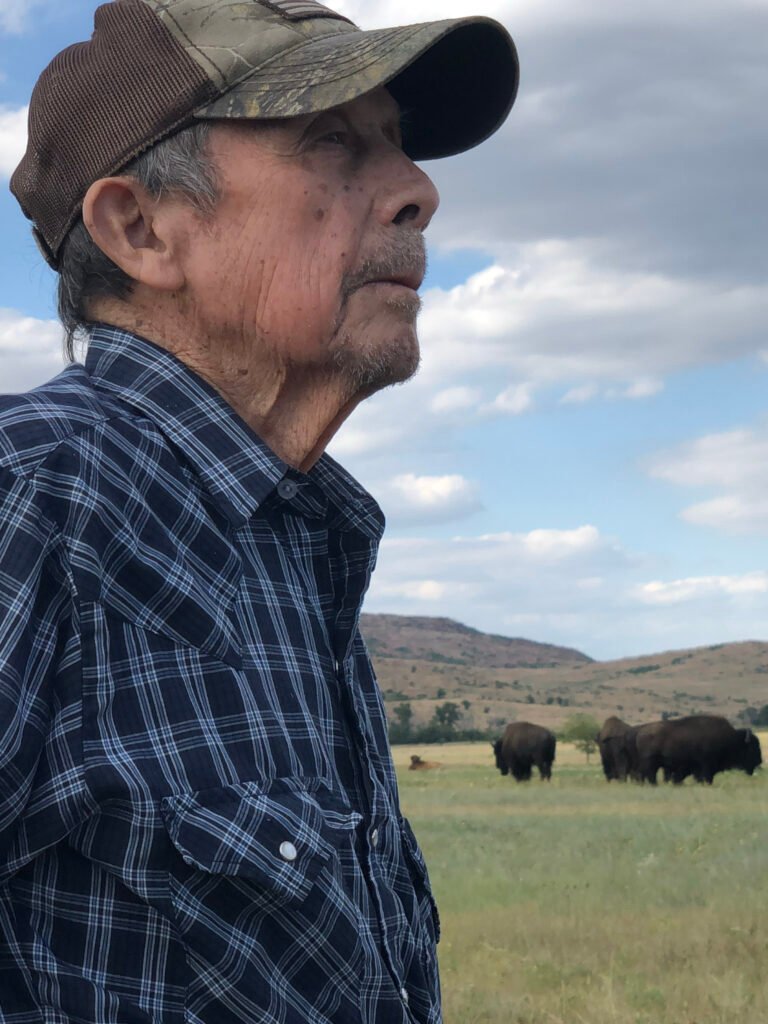
Mack Vann therefore occupies an essential place in the history carried into Blue Wolf Fine Jewelry. His legacy was not fashioned from gold or recorded through military medals. It was carried in his voice.
Every Cherokee sentence he spoke represented culture. Every conversation kept something alive.
And through his daughter, that voice did not disappear. It traveled forward. These were not people standing at a safe distance from history. They lived inside it.
Their lives crossed war, assimilation, political struggle, language preservation and cultural survival. Those experiences eventually converged in the life of a daughter and granddaughter who would build something entirely her own.
That something is Blue Wolf Fine Jewelry And that is why 1101 SW C Ave. carries significance beyond commerce.
There are few famous luxury addresses in the world. Fifth Avenue has Harry Winston. Place Vendôme has centuries of European jewelry tradition. Madison Avenue and Rodeo Drive trade in polished mythology, old names and international prestige.
Blue Wolf Fine Jewelry enters that conversation from a completely different direction.
Its advantage is something no international jewelry conglomerate can purchase at auction, acquire through merger or manufacture through an advertising campaign.
It has a history that belongs only to this family.
And even more unusually, its founder’s chosen craft echoes that of one of the most important figures in her ancestry. Sequoyah worked in silver. Christiansen works in gold and silver. One helped give permanence to language; the other creates objects intended to carry meaning through generations.
That distinction changes the meaning of luxury. At Blue Wolf, provenance does not begin with the diamond. It begins generations before the diamond was ever chosen.
It begins with Sequoyah—silversmith, scholar and creator of the Cherokee syllabary—giving written form to a language.
With a Cherokee soldier beginning his military journey at Fort Sill, just four miles from the address where his granddaughter’s atelier now stands, before carrying that cultural inheritance into Europe.
With families who kept speaking when silence would have been easier. With Native people who demanded political recognition when remaining invisible might have been safer. And finally, with a woman standing inside a jewelry atelier in Lawton, Oklahoma, using the ancient language of the hand—gold, silver, fire, stone and craftsmanship—to turn memory into something that can be worn, inherited and remembered.
That is what makes the address difficult to forget.
That is why 1101 SW C Ave. is more than the home of Blue Wolf Fine Jewelry— it is a living historical landmark, where Cherokee lineage, American service, cultural survival and craftsmanship remain present, not preserved in the past, but carried forward for the generations still to come.